Spotlight
Owner Strategy
One of the best things about being family business owners is that you get to decide for yourselves what you most value. But that doesn’t make defining value easy. There can be both financial and nonfinancial metrics of success. Determining how your family will define success requires your owner group to make some important decisions together about what matters most. Here’s how to think about the right Owner Strategy to guide both your business and your business family for years to come.
What is an Owner Strategy?
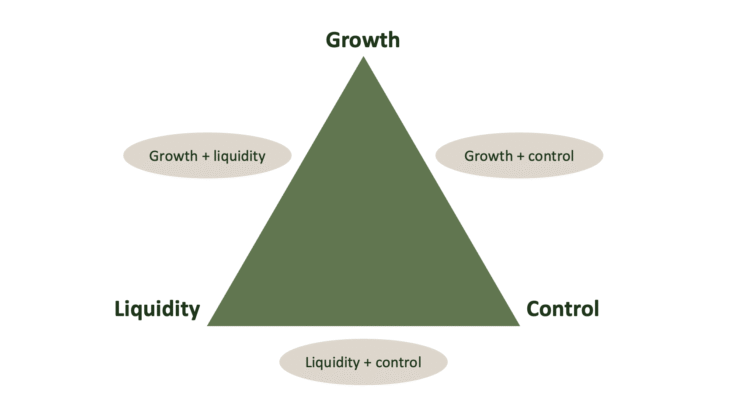
An Owner Strategy is a family business owner group’s explicit statement of what they want from the business they own together. It has three parts: the owners’ shared purpose for owning the business, the financial and non-financial goals they are working toward, and the guardrails they set for the people running the business. BanyanGlobal uses the Owner Strategy Triangle to help owners weigh the three priorities they trade off against one another: growth, liquidity, and control. A clear Owner Strategy and, most importantly, continued conversation, gives the board and management a stable direction to work toward, and it helps the owner group make decisions together instead of pulling in different directions
01.
Defining your Owner Strategy
Growth, liquidity, or control? Determining how your family will define success requires a clear Owner Strategy to help you set priorities for your family business (and business family).





02.
Defining your Purpose
Why do you choose to own your business together with family members? If your family business is bound together only by a surface purpose, it’s unlikely to last in the long run. That’s why it’s essential to have a compelling, agreed-upon purpose.






03.
Setting Owner Goals and Guardrails
How do you make decisions about trade-offs in how and where to create value? And then how can you ensure those running the business understand your priorities? With your Owner goals and guardrails.





04.
Crafting your Owner Strategy Statement
To capture what you value, owners should create an Owner Strategy statement, a document that articulates your purpose, goals, and guardrails, and can form the basis of a dialogue among owners, the board, and management.





05.
Philanthropy in Family Business
Giving back is a priority for most of the family businesses we know. Often, the most successful philanthropic efforts are part of your Owner Strategy, too.




What is an Owner Strategy, and why does a family business need one?
What is the Owner Strategy Triangle?
What is an Owner Strategy Statement, and how does a family create one?


Family business owners benefit from thinking like investors by answering a few questions: What are we trying to accomplish with this business? What are our financial and non-financial expectations? What risks are we willing to take? How will we measure performance against our expectations? Alignment on the answers to these questions allow a family to commit financial and non-financial resources to a shared vision of long-term success.